Soggy Dumplings
How a lunchbox I once wanted to hide became something I'm proud to explain

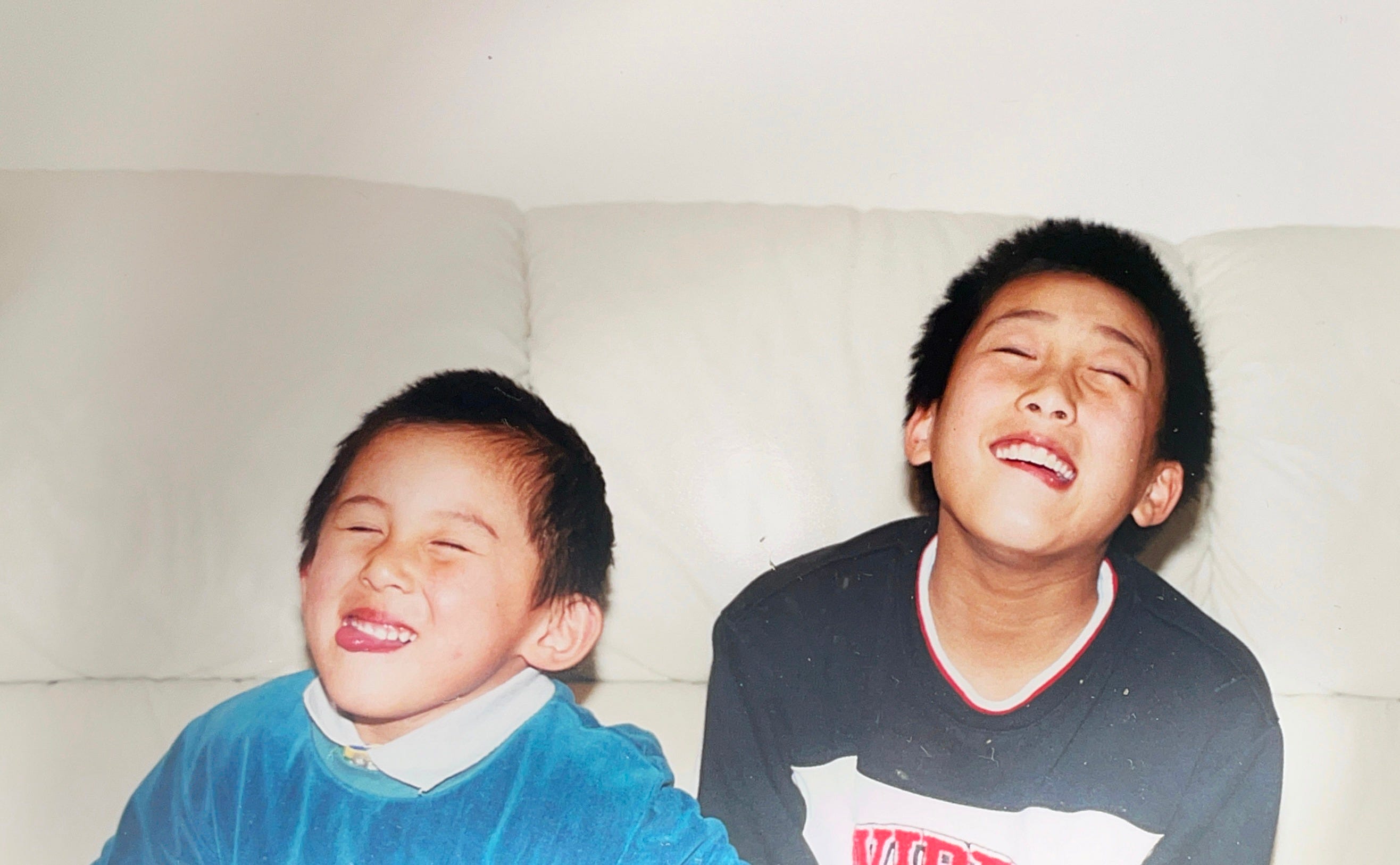
The dumplings were always cold by lunch. I was seven or eight, sitting at the long table at Star Camp, unzipping my lunchbox to find the crispy bottoms gone soft since seven that morning. Around me, kids unwrapped sandwiches, cold pizza slices, chicken tenders still warm in foil. I’d eat with my head down, moving fast, hoping no one leaned over to ask what was in my container. All I wanted was to open that lunchbox one day and find a sandwich staring back at me.
I grew up in Concord, Massachusetts, where there weren’t many kids who looked like me. My English wasn’t great early on — I was in ELA classes, catching up to something my classmates never had to think about. But every summer at Star Camp, on the basketball court, none of that mattered. I could hold my own in scrimmages, get picked early for teams. It was the one place I was good at something without having to translate myself first.
Lunch was where that stopped being true.
It wasn’t only lunch. Most nights we ate Chinese food at home — not a statement about heritage, just what my parents knew how to cook after a full day of work. I liked it, genuinely. But when you’re eight, liking something isn’t the point. The point is that your friends were eating pizza on a random Tuesday and you weren’t, and that gap felt like proof your house ran on different rules. I’d go to friends’ houses, see the freezer stocked with DiGiornos, and think: why can’t we just have that.
It wasn’t until years later, in a different city, that any of this started to loosen.
The shift happened in New York, a few years after college, the first time I was really living on my own.
My roommate and I went out for hot pot one night, no occasion, just a weekend. Growing up, going out for Chinese food was something that happened to me — my parents decided, we went, I ate what was put in front of me. This time was different. I picked the restaurant. I grabbed the menu before he could and started pointing: this for the broth, this for the plate, fish balls first because they take longer, noodles last so they don’t overcook. He kept asking why, actually curious, and I kept explaining. It was the first time I remember feeling like a host instead of a guest at my own culture.
New York also had real Chinese food, block after block of it — nothing like the crab rangoon and lo mein most people grow up thinking is “Chinese food” in America. For the first time, I got to hand someone the real thing instead of the shorthand version.
A trip to China in the fall of 2025 is where it became something else entirely.
Natasa’s company sent her to Changping for a week, and I got to tag along — her first time in the country. At a food court, we watched a man stretch a lump of dough into a single strand, folding and pulling until it split into dozens of thin ropes that went straight into a boiling pot. We each got a bowl.
Breakfast threw her the most — noodle bowls, dumplings, savory pancakes, a whole spread served at eight in the morning like it was nothing. “I never would’ve thought to eat this for breakfast,” she said, steam fogging up in front of her face. I told her most cuisines start to taste the same after a while. Not Chinese cuisine, I said — and by the end of the week, I half believed myself less and her more.
A few months after we got back, she brought the trip up on her own, unprompted, over dinner with friends who’d asked about her travels.
I’ll watch a friend order a salad, a plate of cold, raw vegetables, and think — half-joking, half not — that’s what you feed livestock. The food I used to hide in a lunchbox became something I was proud to explain, plate by plate, to anyone willing to ask.
But I still can’t read the language. Out at a Chinese restaurant with friends, they’ll slide the menu toward me without asking, assuming I’ve got it handled. Sometimes I’m squinting at characters I half-recognize, guessing at a dish by one word I know sitting next to four I don’t. My mom would notice the guessing, if she still could. She used to correct my tones or grammar without even looking up from what she was doing — a reflex, not a lesson. I miss being corrected. I do the guessing alone now.
But there’s one thing she hasn’t forgotten.
The last couple of times I’ve gone home, I’ve made the fillings myself and brought a pack of wrappers, and my mom and I sit at the kitchen table and wrap dumplings together. The kitchen smells like ginger and scallion while a pot of water works up to a boil on the stove behind us. I portion out the filling and slide the bowl toward her the way she used to slide bowls toward me.
She can’t tell me anymore how she learned to do this, or whose hands taught her, or what the filling was supposed to taste like growing up in Shanghai. Ask her for the recipe and she’ll look at you like you asked her to recite a phone number from forty years ago. That part is gone.
But her hands still know. She takes the wrapper, sets exactly the right amount of filling in the center — never too much, never a hole where the seam won’t seal — and folds it shut in three or four pleats, fast, like she’s not watching her own fingers do it. I fumble mine. Too much filling, wrappers that split, dumplings that look like they lost a fight. Hers still come out perfect, uniform, like they rolled off a machine.
It’s strange, watching a skill outlive the memory that built it. She doesn’t know why her hands do what they do. They just do it, the way they’ve done it thousands of times, long before Alzheimer’s and long before me.
We used to keep a bag of dumplings in the freezer at all times growing up — the fallback dinner, the thing you boiled up when nobody felt like cooking. I never thought about where that habit came from. Now I know. It came from a woman who could fold fifty of them without thinking, who is still, in whatever way this disease allows, that person across the table from me.
I think about that kid at Star Camp sometimes, hiding his lunchbox so nobody would ask what was inside. These days I’d hand it to anyone at that table and tell them exactly what’s in it, and why, and how my mom taught me to fold it shut.
I don’t know how much longer her hands will remember what her mind can’t. I don’t ask. I just keep bringing the wrappers.
‘that’s what you feed livestock.’ - my husband who is from Taiwan says this to me whenever I order a salad, which I find funny.
Alzheimer’s is a horrible disease. I’m sorry your mother is suffering from it. Thanks for sharing this heartwarming story.
I clicked because I love dumplings, then stayed for the moving story. Thank you so much for sharing. I just subscribed!