Growing Up Between Two Worlds
What happens to your Chinese identity when the people who gave it to you are slowly disappearing

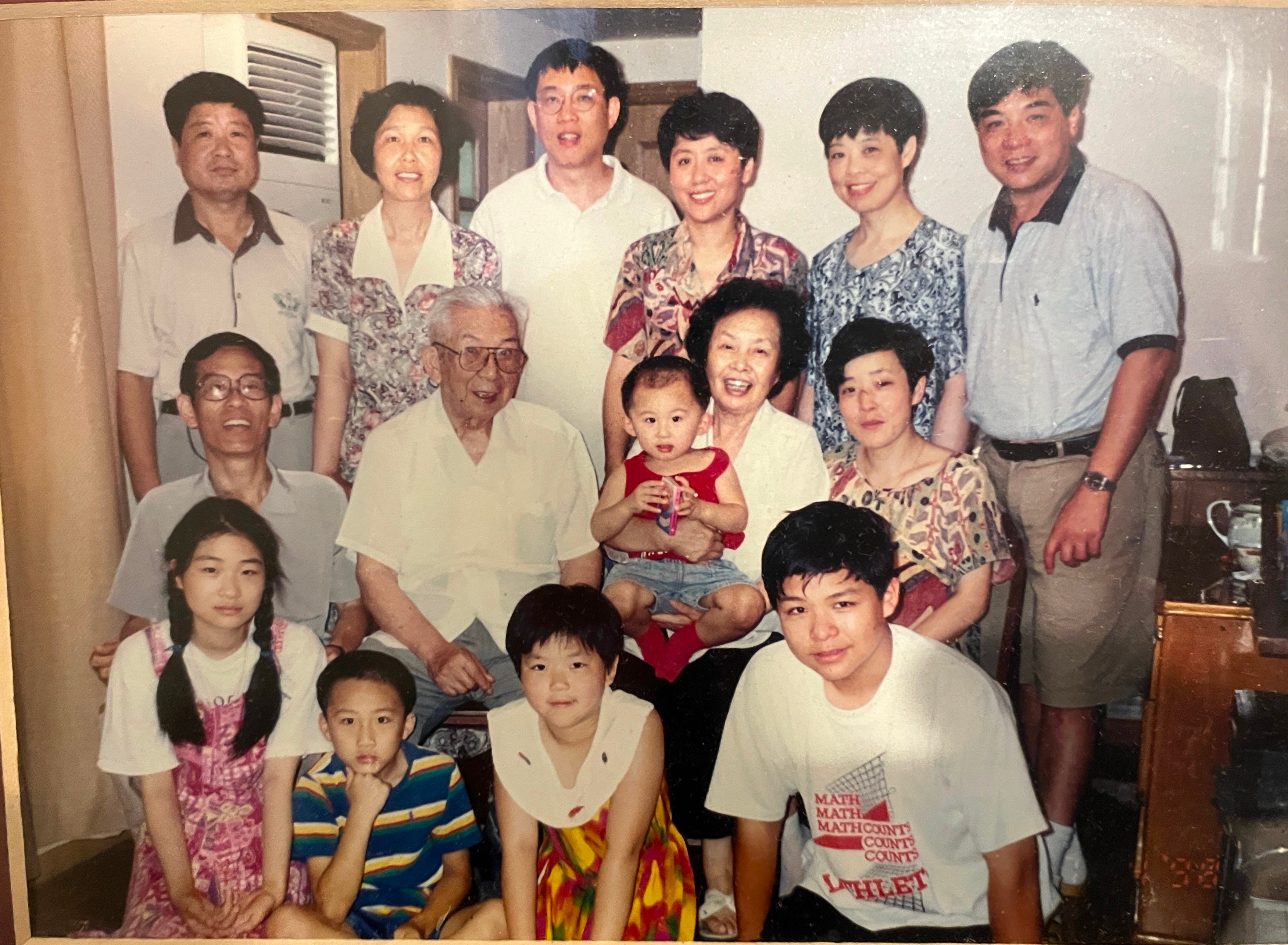
Growing up in Concord, Massachusetts, our family did things a little differently.
Concord was a predominantly white town with few Asian families. But inside our house, the world looked different. Chinese was the language spoken at home. We had Chinese nannies for most of my childhood. Every meal my mom cooked was Chinese food. And on Sundays, while other kids went to church, my brother Michael and I went to Chinese school.
Every other summer, we packed up and flew to Shanghai for a month in the brutal heat.
As a child, I didn’t look forward to it. Being pulled away from my friends, dropped into a loud and crowded city in the early 1990s, crammed into an 800-square-foot apartment with no air conditioning. Shanghai back then felt nothing like the modern skyline it is today.
I remember going to summer camp with a packed lunch of dumplings, quietly trying to barter them for a sandwich or a slice of pizza.
Those dumplings weren’t store-bought. Every month, usually on a Saturday or Sunday, my mom would clear the kitchen table and spend hours wrapping dumplings for the family. The fillings rotated — beef, chicken, occasionally both — but it was mostly pork. She’d make them in large batches and stock our freezer so we always had something to eat. After school, when there was no time to cook dinner, those dumplings were always there. A quick boil, a few minutes, and the meal was done.
At the time, it felt ordinary. Now I understand how much intention went into that ritual — the time she carved out, week after week, to make sure we were fed in a way that felt like home.
I was growing up between two worlds. At school, I was American. But the moment I came home, I was immersed in Chinese culture — the language, the food, the expectations, the values. My parents were the bridge between those two worlds. They were my anchor to China.
Because we had no extended family in the Boston area, every major holiday was spent with the same three Chinese families my parents had gone to college with at the University of Arizona, who had all ended up settling in Massachusetts. Those dinners were loud and warm, full of Mandarin and laughter, and they were the closest thing we had to a Chinese community here.
My parents held all of that together.
The trip after I completed 5th grade was a memorable one.
It was a significant trip. For the first time in years, my dad’s entire side of the family managed to gather in one place — all four siblings, their spouses, their kids. Looking back now, I didn’t realize what I was witnessing. That summer was the last time all four of them would ever be together with their families like that.
Since then, my dad’s oldest brother passed away from cancer. My two female cousins on that side — I’ve seen one of them exactly once, at my grandfather’s funeral. The other, I’m not sure I’d even know how to reach. I don’t have a phone number. The connection that once felt like family now feels like the memory of family.
Michael’s relationship with Shanghai looked different from mine. In middle school and high school, he would go back every summer to train in ping pong at a local academy. My dad and aunt would set everything up for him — the schedule, the coaches, the logistics. For Michael, those summers had a structure and a purpose. They kept him tethered to China in a way that my reluctant trips never quite did for me.
We experienced the same heritage differently. And now, as adults, I wonder how much of it either of us has truly held onto.
Now, as my parents get older, I’ve started to notice how much of that world depended on them.
I still eat a lot of Chinese food — if you ask me, the sheer diversity of Chinese cuisine makes it one of the best in the world. But my opportunities to speak Mandarin have quietly shrunk. A conversation with family here and there. Maybe a few words at a Chinese restaurant. The language that once filled our home now lives mostly in the background of my life.
Trips back to China have become less frequent too. And when I do go, I’ve realized how much I depend on my aunts and uncles to help me navigate — the transportation, the apps, the systems, the social codes. Without them, I would be lost. They are the connective tissue between me and a country that is technically part of my heritage but increasingly feels foreign.
I never truly celebrated Chinese holidays the way my parents did. Lunar New Year came and went most years without much acknowledgment.
And now, as my mom’s Alzheimer’s progresses and my dad weighs a move back to Shanghai, I feel something I didn’t expect.
I feel like I’m losing my cultural anchor.
My parents were never just my parents. They were my living connection to China — to the language, the history, the food, the stories. My mom was the one who wrapped the dumplings I was too embarrassed to eat at summer camp. My dad was the one who put us on those flights to Shanghai every other summer, even when we resisted. They were the ones who made sure that no matter how American our lives looked from the outside, something essential about where we came from was always present inside our home.
Alzheimer’s has already begun to take my mom’s stories. The memories she once held — of Shanghai, of her childhood, of our family history — are slipping away, rearranging themselves into something unrecognizable. And with each visit, I feel the distance between us growing, not just emotionally, but culturally.
The bridge is quietly disappearing.
I’m not sure what it means to be Chinese American when the people who made you Chinese are no longer fully there. I’m still figuring that out.
But I think that’s part of what I’m trying to hold onto by writing this — not just my mom’s memory, but the world she carried with her. The one she built inside a small house in Concord, Massachusetts, so that her kids would never fully forget where they came from.
For those of you who grew up between two cultures — what happens to that identity when the people who gave it to you are no longer fully there? I’d love to hear your story in the comments.
Great piece. I think a lot of people will find it relevant.
This is something I still wrestle with daily, but I’m learning to hold whatever I can hold, even the full confusion.
I’m Korean, but I found out later in life that I was adopted as an infant, with the possibility of being 1/4 Chinese (DNA tests..). There were many Chinese immigrants living in Korea, so that piece may be part of my story too. And now I’m Korean, possibly Chinese, Jewish by conversion, and American. It used to stress me out, but these days, I’m trying to stay curious and enjoy what each piece offers.
I grew up in one culture but have been living in two for the last 37 years. Reclaiming my identity and culture, and redefining my dream is the quest for the next phase of my life. No matter how long that will take, I am glad I am on that journey.
I never had a chance to say goodbye to my mom; two years in, I am still navigating that grief, about losing my mom, and losing the connection to the past.
Treasure what you still have. ❤️